 Chinese
 English
 Russian
I、 The principle of hydraulic flow waste under no-load conditions and its impact on electric loaders
The hydraulic pump is driven by a driving motor to rotate, and the output flow rate, speed, and displacement of the pump are directly related. The speed of the quantitative pump remains constant, and the output flow rate remains unchanged. When the operator releases the control handle, the multi way valve is in the neutral position, and there is no need for the oil cylinder to move. The oil output from the hydraulic pump has no place to go, and the overflow valve can only be pushed open to return to the oil tank. During this process, the motor continuously consumes electrical energy to promote oil circulation, but does not produce any effective operational actions, which is a typical no-load energy consumption. During short cycle material yard operations, equipment is frequently in a neutral standby state, and over time, the proportion of no-load energy consumption in the overall energy consumption of the machine is considerable.
In addition to wasting electricity, continuous overflow brings additional heat. The hydraulic oil repeatedly overflows and heats up. If the oil temperature is too high, it will accelerate the aging and deterioration of the hydraulic oil, and the probability of high-temperature aging and leakage of seals will increase. After the oil temperature rises, the viscosity of the hydraulic oil decreases, the lubrication performance deteriorates, and the wear of the precision fitting surfaces inside the valve group and pump body intensifies. The hydraulic overflow energy consumption of fuel loaders is reflected in fuel consumption, while electric loaders directly consume battery power, and the energy consumption changes will be intuitively reflected in the endurance time.
Simply reducing the pump displacement can only decrease the flow rate, but it will sacrifice the speed of heavy-duty operation. If the maximum flow rate of the pump is too small, there will be insufficient oil supply during the combined lifting and bucket retraction actions, resulting in slow movement and decreased operational efficiency. Energy saving solutions cannot come at the cost of sacrificing operational performance. To balance heavy-duty performance and no-load energy saving, hydraulic pumps need to have flow adaptive capability, which can dynamically change the output flow according to the operating load and supply oil as needed.
II、 Working Logic of the Flow Adaptive Control System for Jining Xinghang Hydraulic Pump
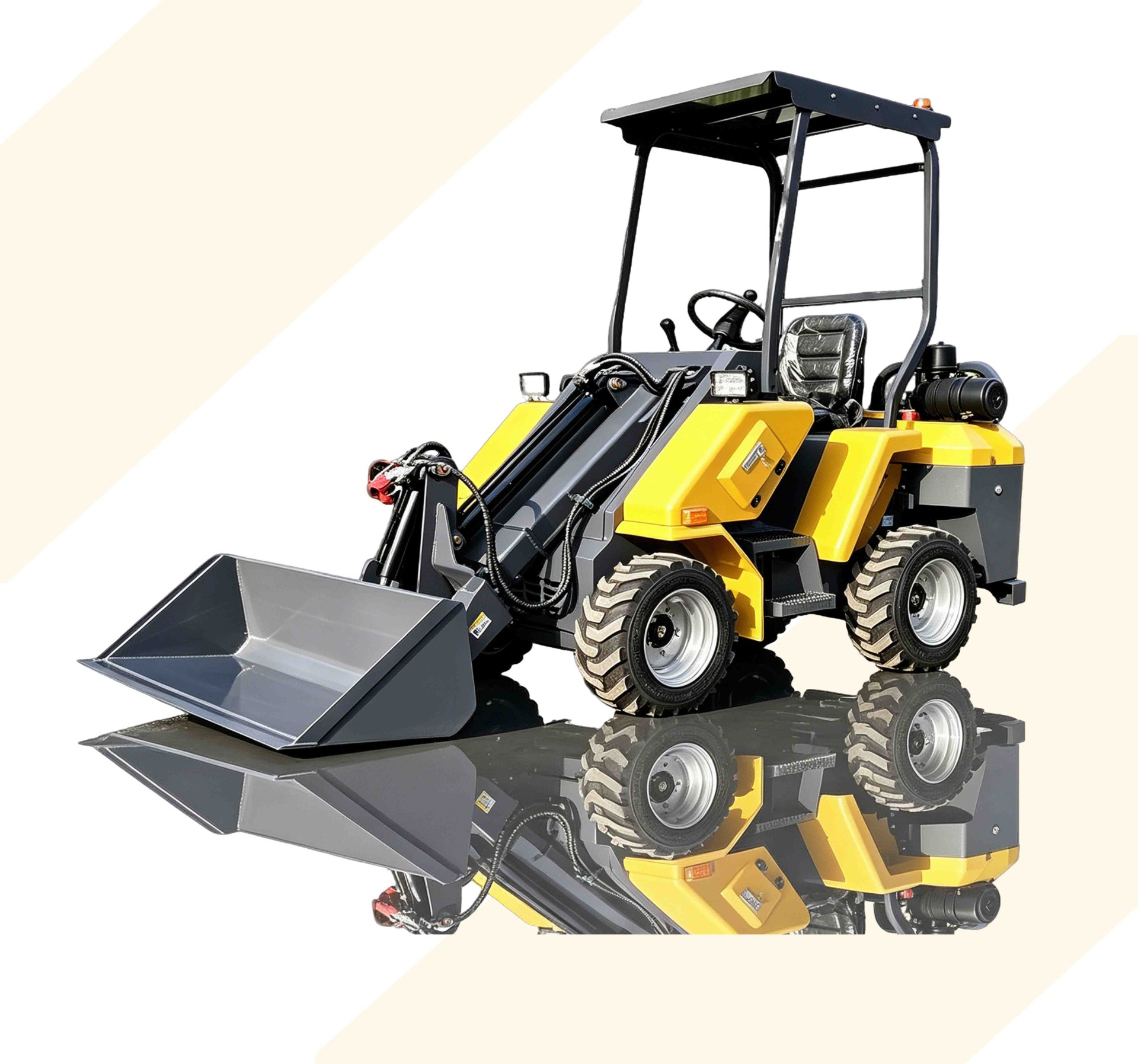
The Jining Xinghang electric loader adopts an electronically controlled variable hydraulic pump, and the output displacement of the pump can be adjusted in real time by receiving electronic control signals. The VCU of the entire vehicle continuously collects signals from the opening of multiple valve handles, the rate of change of the handles, and the pressure of the hydraulic system to determine the current operating conditions. When the handle returns to the neutral position and there is no action request, the system determines that it has entered the idle standby condition, sends a signal to reduce the hydraulic pump displacement, and the pump output flow rate decreases, greatly reducing the energy loss caused by overflow.
When the operator pushes the handle to perform lifting and bucket retraction actions, the VCU determines the required flow rate based on the size of the handle opening and the speed of pushing. The handle is slowly pushed slightly, which belongs to the fine adjustment action, and the pump outputs a medium flow rate; The handle is quickly pushed to full, performing a fast composite shovel loading action. The pump immediately increases to its maximum displacement, outputting sufficient flow to ensure the response speed of the action. Excavating a hard material pile, the system detects an increase in hydraulic pressure and identifies it as a heavy load condition. It maintains sufficient flow and system pressure to ensure that the excavation force does not decrease.
This adaptive adjustment system not only relies on hydraulic load sensitive signals, but also links with the vehicle's electronic control system. VCU can be adjusted in conjunction with the overall machine status. For example, when the battery level is low, further optimize the pump flow output strategy to reduce energy consumption without affecting basic operations; Multiple composite actions are executed simultaneously, and the system allocates flow reasonably to avoid actions competing for oil. Compared with traditional pure hydraulic load sensitive pumps, electronic flow adaptive control can predict operational intentions, adjust flow response faster, and reduce transient overflow losses.
III、 Simulation and real vehicle calibration, balancing energy-saving effects and operational feel
In the system development phase, the R&D team builds a hydraulic system simulation model to simulate the complete shovel loading cycle, disassembles pump flow and energy consumption data under various working conditions such as idle standby, light load fine adjustment, heavy load excavation, and lifting unloading, and optimizes pump adjustment response parameters. After the simulation is completed, enter multiple rounds of real vehicle calibration and invite frontline operators to operate and test. The most common problem with energy-saving optimization is the lag in flow regulation, slow response after pushing the handle, and affecting the operation feel.
The calibration process repeatedly adjusts the response curve to distinguish the operator's intention. Slowly adjust the position of the bucket by operating the handle, and the flow rate changes smoothly; Quickly operate the handle for shoveling and loading operations, and the pump can quickly increase the flow rate to ensure smooth movement. Simultaneously setting a flow protection upper limit, even if the electronic control signal is abnormal, the maximum displacement of the pump will not exceed the mechanical limit, preventing excessive flow from causing system impact. Reserve two control modes for different material operation scenarios. Standard mode balances energy efficiency and work speed; The overload mode prioritizes flow supply and is suitable for handling difficult to shovel materials such as compacted clay and construction waste.
IV、 On site value and maintenance points of flow adaptive system
The most intuitive benefit of a flow adaptive hydraulic pump is the reduction of ineffective energy consumption during the neutral standby and no-load stages. With the same battery capacity, it can increase the number of operating cycles and improve the daily output of the equipment. Hydraulic overflow reduces heat generation, the working temperature of hydraulic oil is more stable, the service life of hydraulic oil and seals is extended, and the probability of hydraulic leakage failure is reduced.
Operations personnel need to understand the characteristics of this system. Flow adaptive belongs to the electronic control+hydraulic collaborative system. If the hydraulic pressure sensor or signal harness fails, the pump will enter the default protection mode, maintain a fixed flow rate, and the no-load energy consumption will increase. Pay attention to the hydraulic oil temperature during daily inspections. If it is found that the oil temperature is abnormally high under no-load conditions, it is necessary to check whether the pump adjustment function and sensor signals are normal. Replace the hydraulic filter element according to the maintenance cycle to prevent small impurities from jamming the variable mechanism and affecting the pump displacement adjustment.
Conclusion
Hydraulic pump no-load flow overflow is one of the main energy sources in short cycle operation scenarios of small electric loaders. The constant output flow rate of the quantitative pump continuously generates ineffective energy consumption during the standby stage of the handle, which not only wastes electricity but also causes heating problems in the hydraulic system. The Jining Xinghang electric loader adopts an adaptive control scheme for variable hydraulic pump flow rate, combined with the operation signals collected by the vehicle VCU, to adjust the pump output flow rate in real time as needed, reduce overflow losses during no-load flow reduction, and ensure operational performance during heavy load and full flow. Reduce no-load energy consumption, lower hydraulic system heating, extend hydraulic component life, and improve the endurance performance of electric loaders in high-frequency short cycle operation scenarios in the factory area without sacrificing shovel loading efficiency.